Spotify Clips
Spotify Clips is a conceptual feature that helps podcast listeners save meaningful audio moments alongside text transcripts, turning passive listening into an intentional, multimodal learning experience.
8 weeks | Dec 2022 - Jan2023
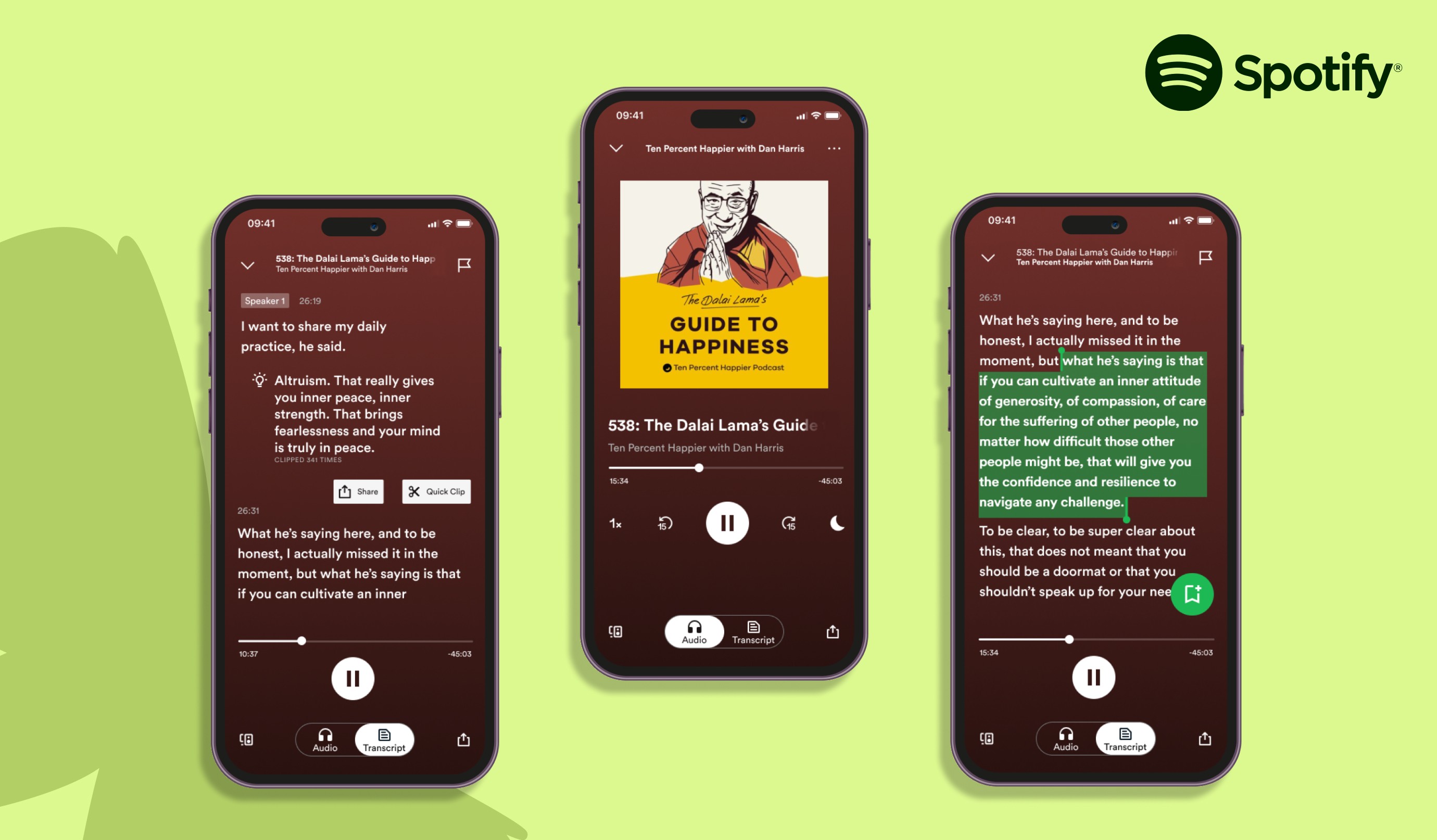
Turning listening into learning.
Overview
Podcasts have become one of the most accessible ways to learn. Whether about careers, health, creativity, or the world at large, information is right at our fingertips, convenient and free. But while listeners absorb hours of thoughtful conversations, insights often slip away the moment the episode ends.
Spotify Clips is a conceptual feature designed to help podcast listeners save meaningful moments—both audio and transcript excerpts—so they can return to what matters, learn more effectively, and share insights with others.
This project was completed as part of DesignLab’s UX Academy.
Role
Solo UX/UI designer
Tools
Figma/FigJam
Dovetail
Maze
PROBLEM
Spotify has spent the past several years investing heavily in podcasts, expanding its catalog, onboarding creators, and positioning itself as the world’s leading audio platform. Podcasts are no longer just entertainment; they’re a primary source of learning for millions of people.
Yet, despite this explosion of long-form knowledge, there’s a gap:
Listeners have no easy way to save, revisit, or organize what they’ve learned.
People rewind. They jot notes in a separate app. They make a mental note to remember later (but usually don’t).
THE CHALLENGE
How might Spotify help podcast listeners capture and return to meaningful content without disrupting the listening experience?
Solution
Spotify Clips: an integrated feature that allows listeners to save audio + text clips from podcast episodes, creating a personal library of insights listeners can revisit anytime.
MARKET LANDSCAPE
I analyzed five major podcast platforms to understand existing listening and discovery patterns. While interfaces varied slightly, the core listening experience was nearly identical across platforms.
What sets Spotify apart isn’t just podcasts—it’s consolidation. Music, podcasts, audiobooks, all in one place. That's what makes Spotify uniquely positioned to turn listening into a richer, more intentional experience.

USER RESEARCH
74% of listeners tune into podcasts to learn something new, yet have no way to save what matters most.
To understand how people actually listen and learn, I interviewed 9 podcast listeners and mapped insights using Dovetail.
A few themes emerged quickly:

I’ll open my notes app to jot something down...but then I have to rewind the podcast. Or I’ll just make a mental note but most often I forget it.

I listen to podcasts to learn new things. Usually self-help or career related.

I don’t usually save whole episodes and rarely re-listen to one I’ve already listened to. I'd more likely save shorter clips to reference later or share with other people
From the user insights, it was clear that the value of podcasts to users is not just for entertainment purposes. Listeners tune in because they are open to learning something new.
THE LEARNING OPPORTUNITY
Make it multimodal: the presence of two modalities of learning improves learning outcomes.
HYPOTHESIS
If listeners can save podcast clips paired with text transcripts, they’ll retain information better and return to Spotify as a learning resource, not just an entertainment platform.
Balancing Spotify’s business goals (engagement, retention) with user needs (learning, recall), I formed the hypothesis aboving using three guiding questions:
How might we make saving podcast insights effortless?
How might we encourage listeners to capture meaningful moments?
How might we establish podcasts as a credible learning tool?
DESIGn APPROACH
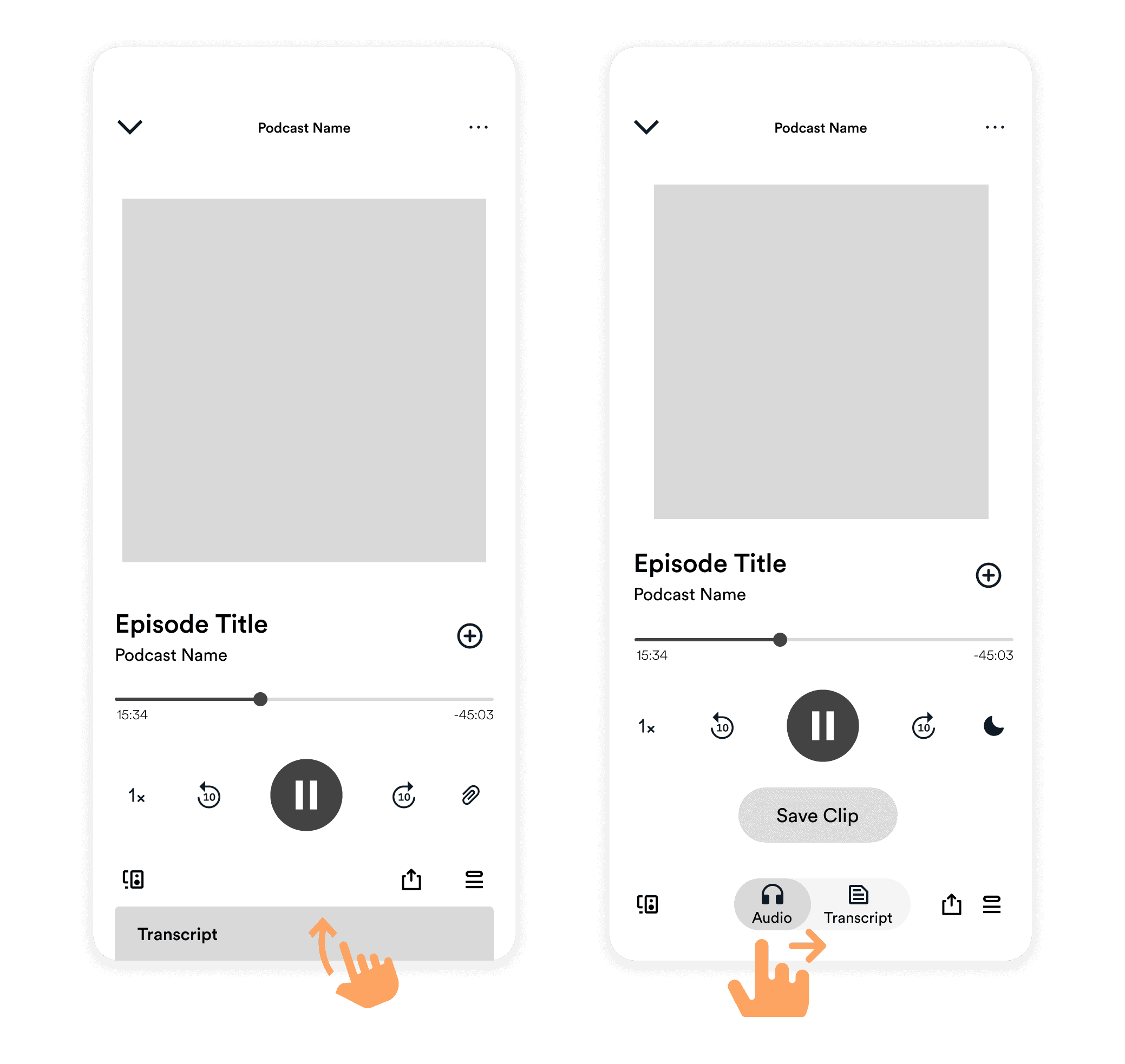
Transitioning from audio player to transcript.
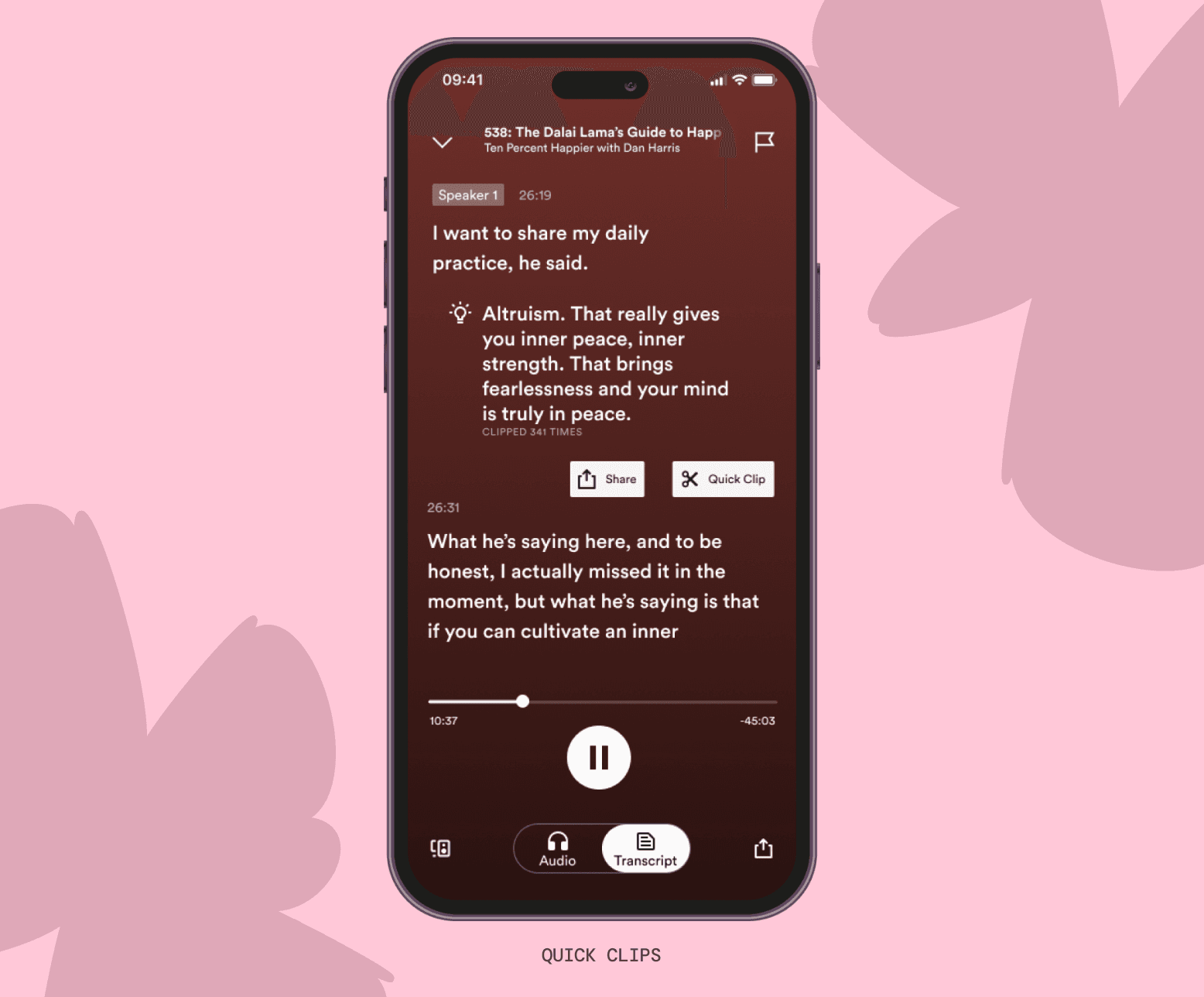
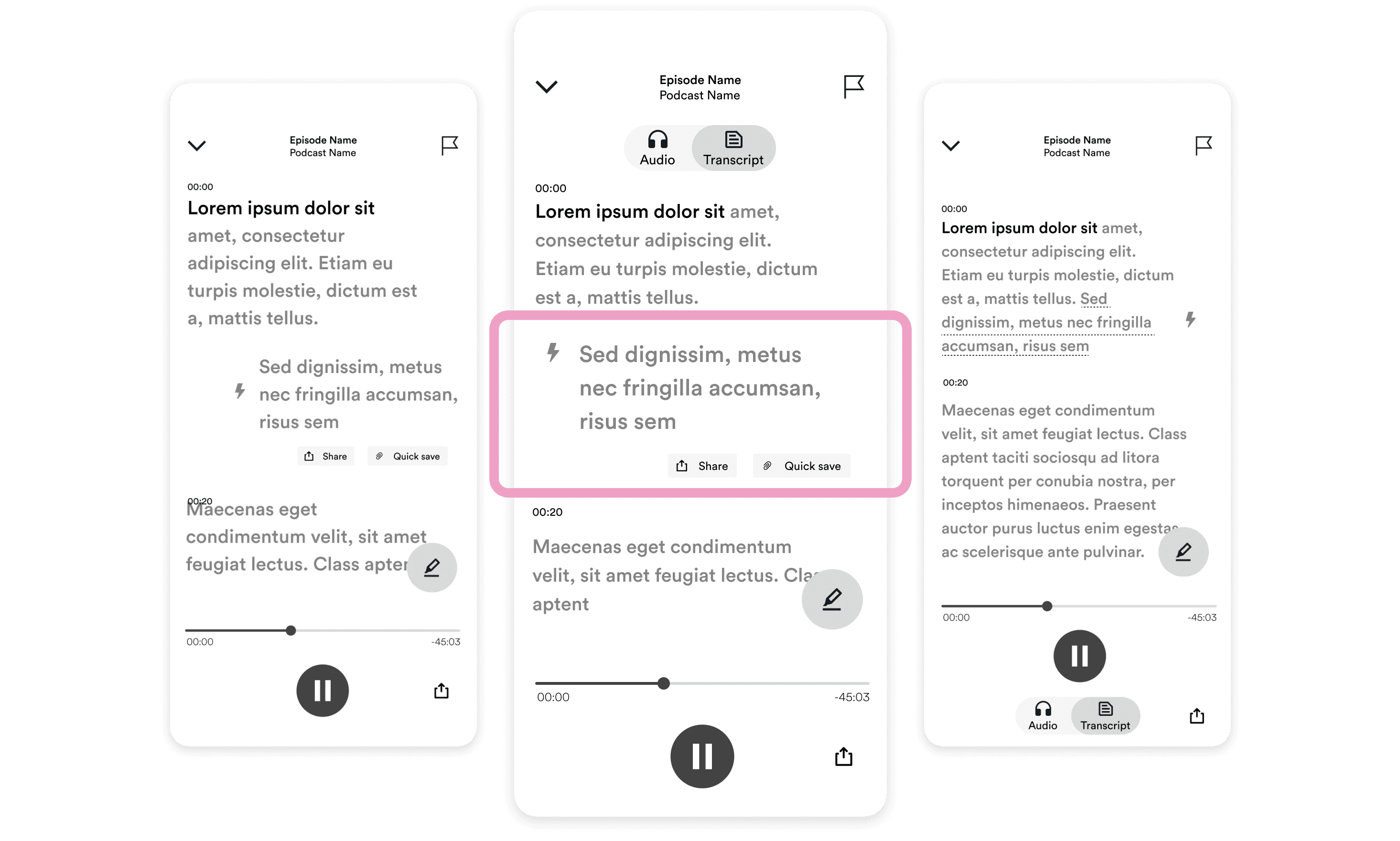
Saving 'Quick Clips'
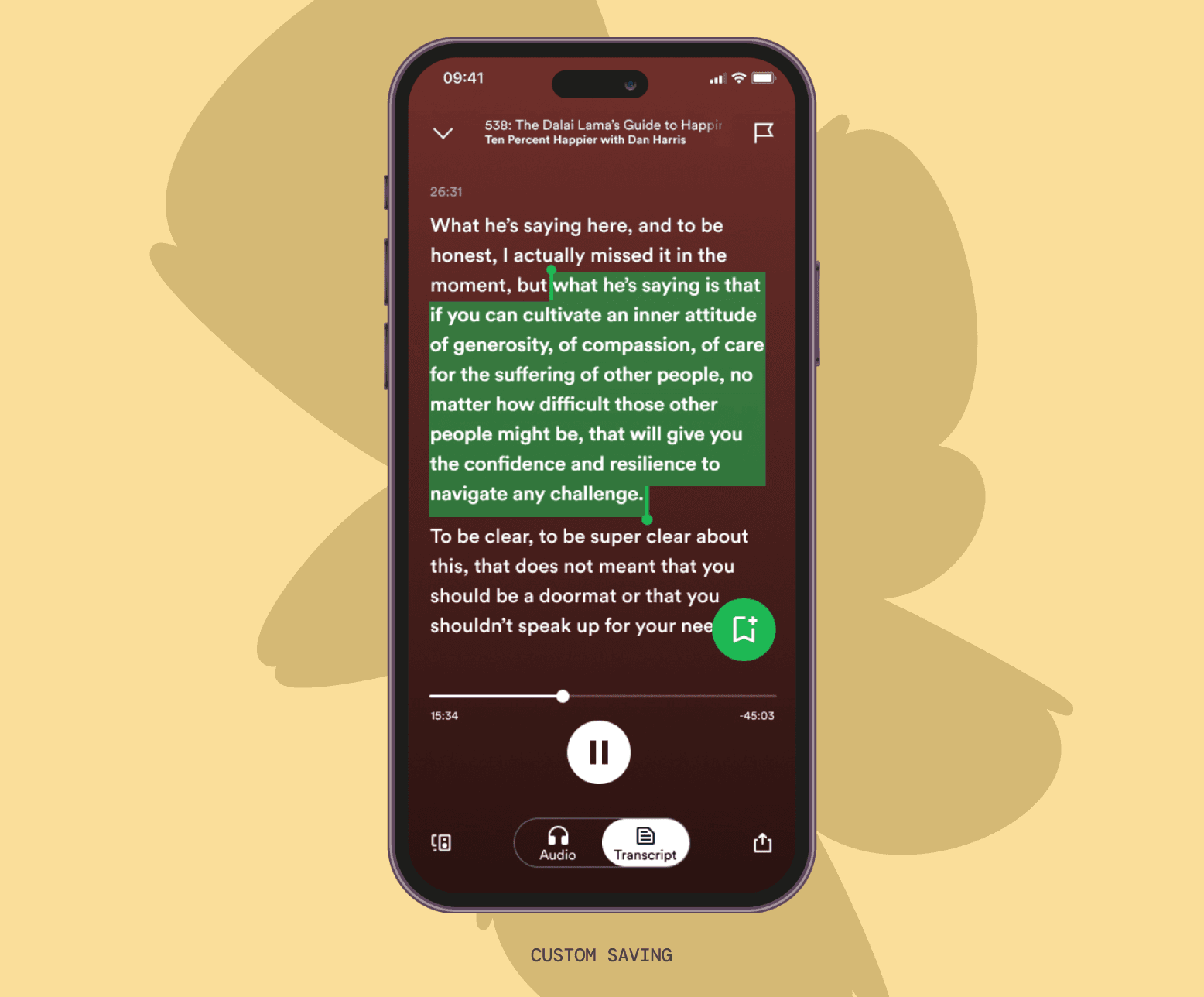
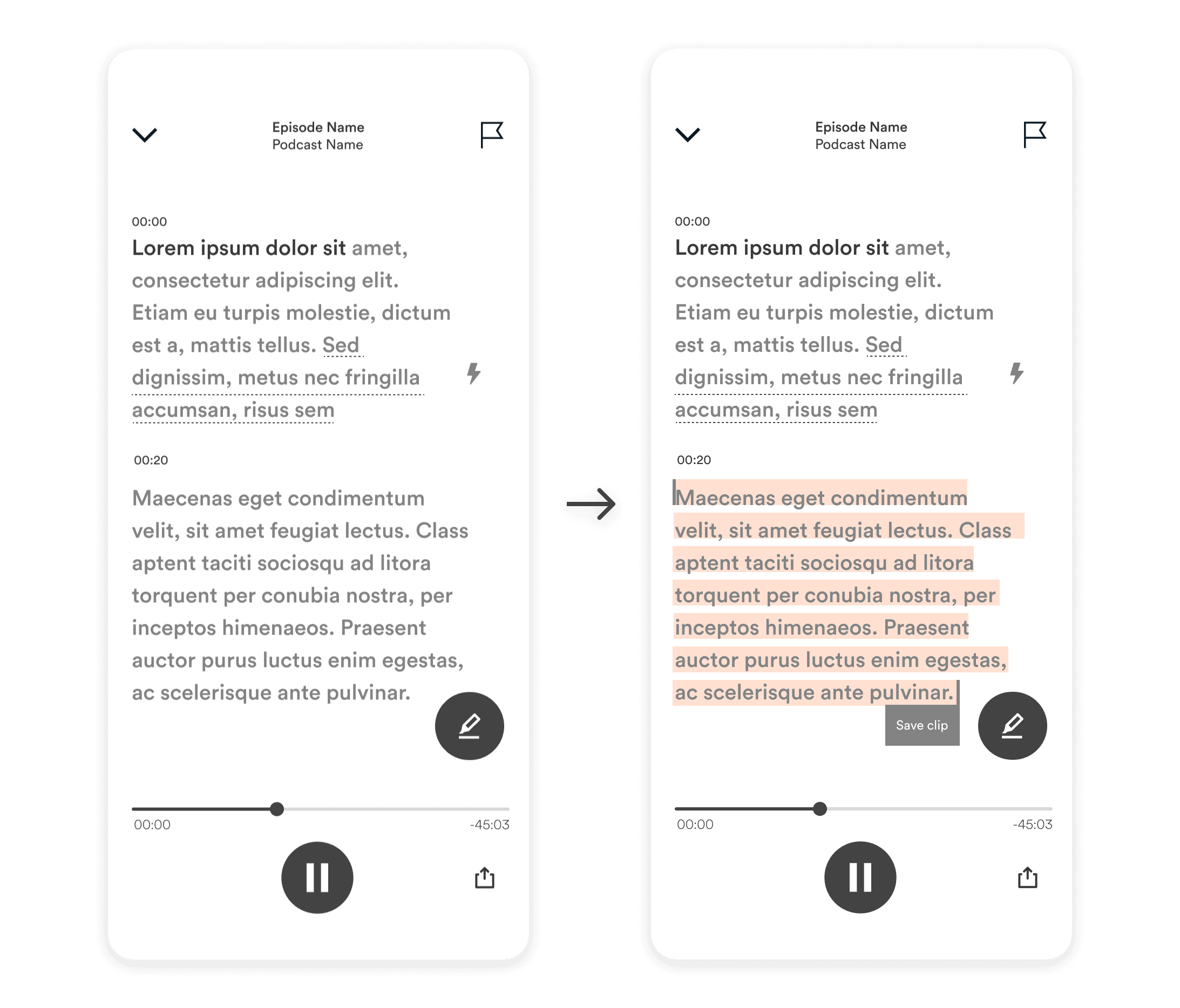
Saving custom clips
Usability Testing & IMPACT
Through 5 moderated tests and 18 unmoderated tests and a System Usability Scale questionnaire, I gathered the following feedback:
77.5 System Usability Score
This places the feature in the “good” usability range, indicating users found it intuitive and well-integrated within Spotify’s existing experience.
90%+ task completion rate
Users were able to successfully save clips, navigate transcripts, and access saved content without guidance during testing.
Low learning curve
Most users understood how to save both Quick Clips and custom transcript highlights on their first attempt, suggesting minimal onboarding friction.
FINAL SOLUTION
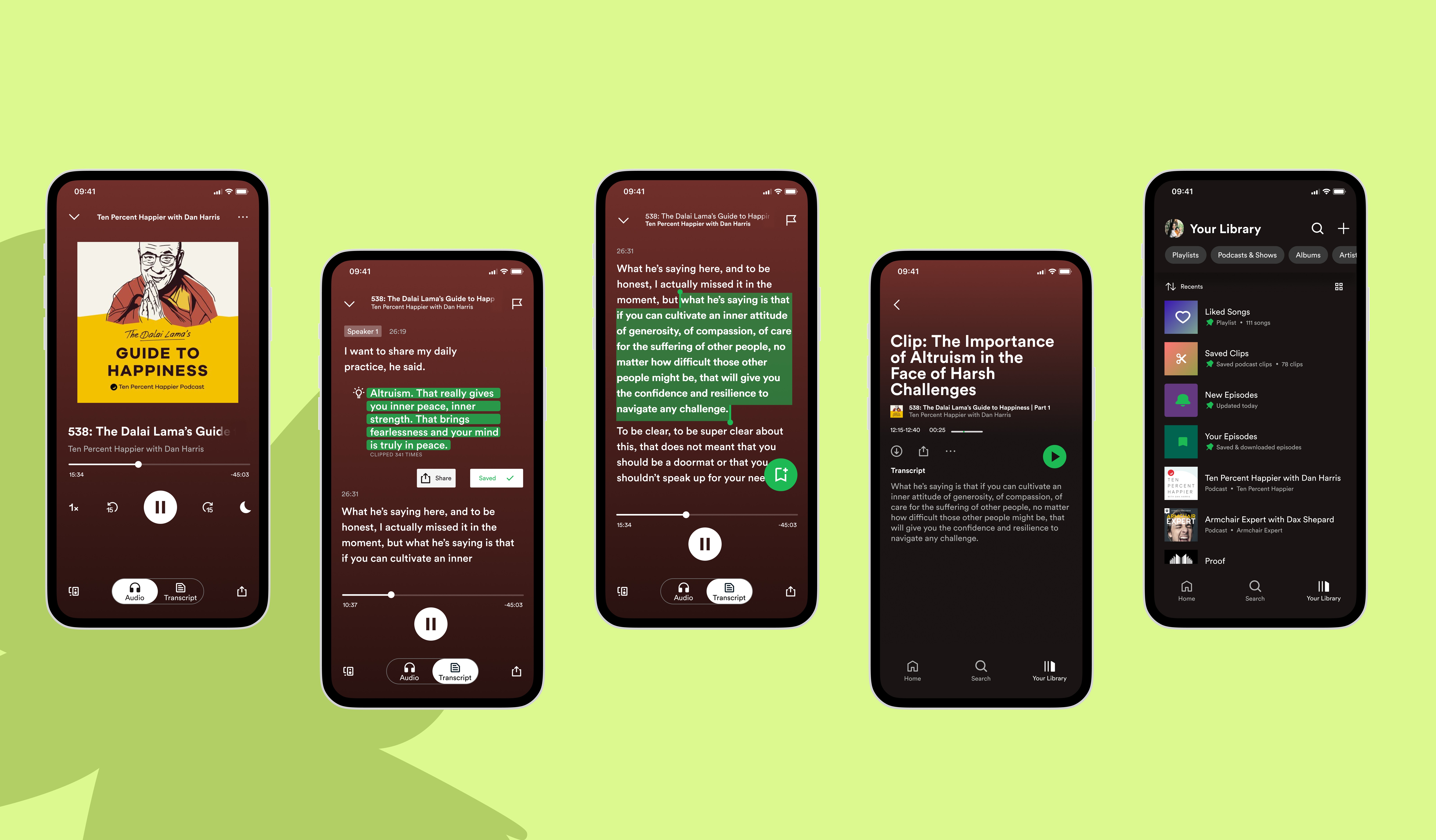
Spotify Clips allows listeners to:
Save meaningful podcast moments as audio + text
Capture insights without breaking flow
Build a personal library of learning
Return to ideas when inspiration strikes
Main features:
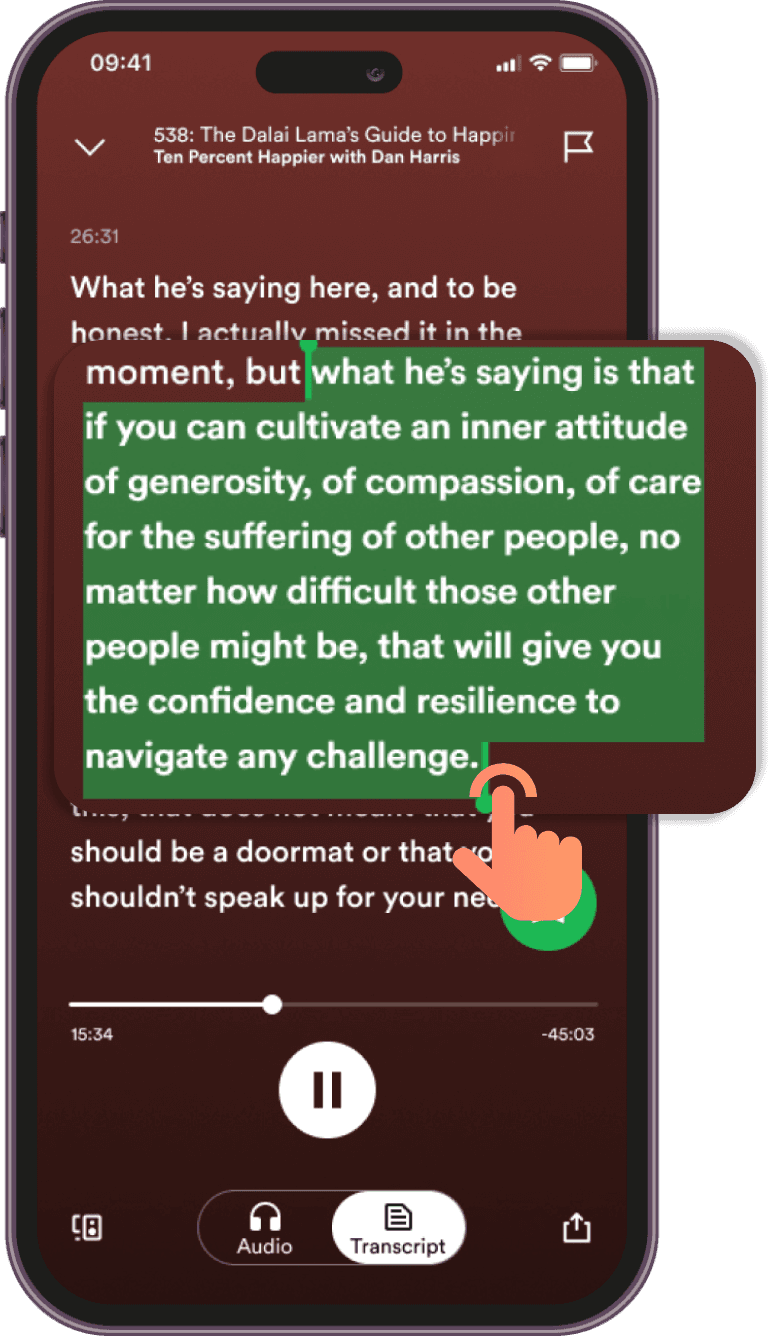
Save Custom Clips
Create saved text and audio clips by highlighting a transcript.
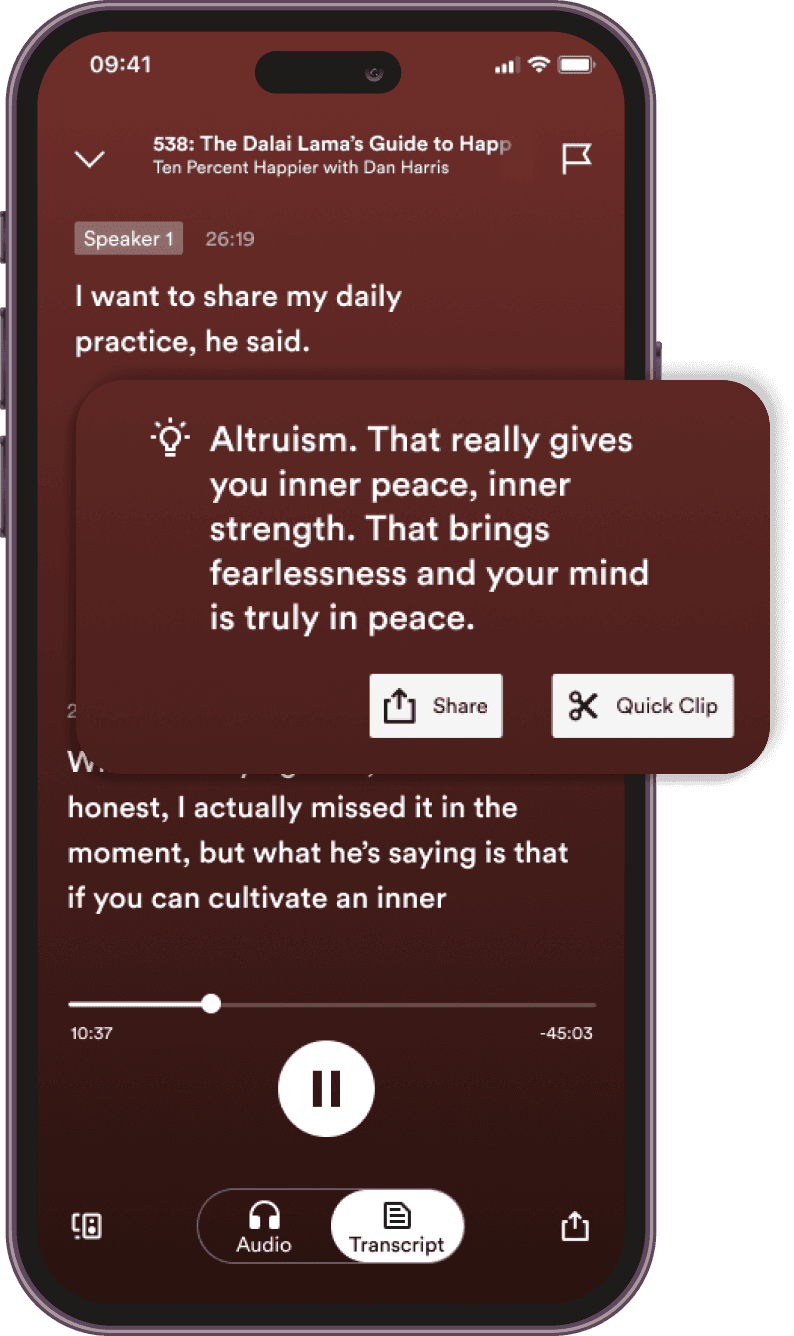
Save Quick Clips
View and save the most popular insights of an episode with just one click
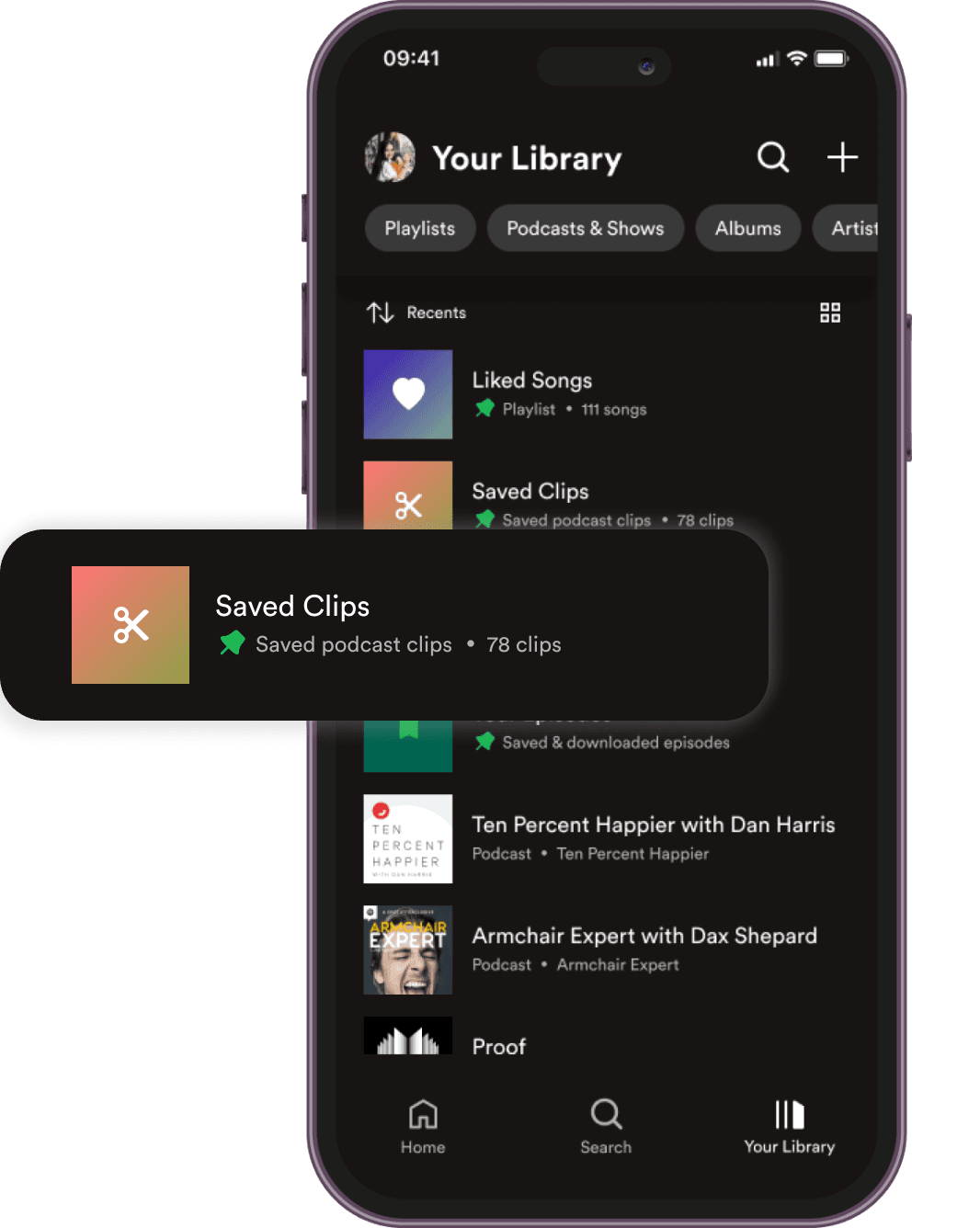
Saved Clips Library
Access your saved clips or view the clip's transcript from your library when the inspiration strikes.
PROTOTYPE
REFLECTIONS
This feature isn’t revolutionary because it introduces transcripts or saving. It’s powerful because it connects listening to learning.
As a former teacher, I’ve seen firsthand how accessibility and multiple learning modalities help ideas stick. Designing Spotify Clips reinforced my belief that great UX isn’t about novelty; it’s about removing friction from behaviors people already want.